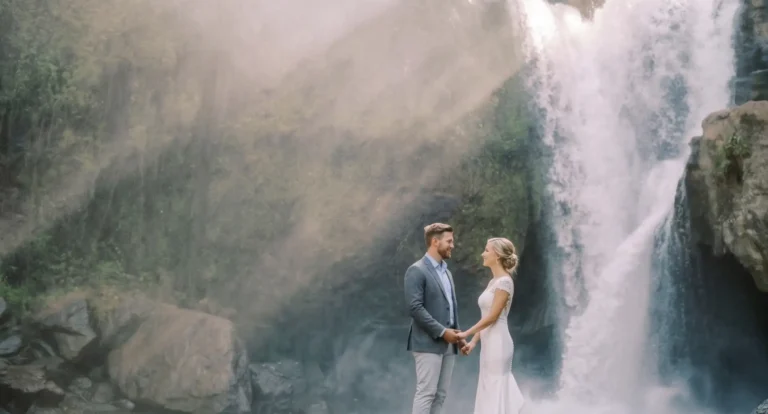
A beach wedding in Bali can be beautiful without feeling overly complicated. The island offers tropical coastlines, dramatic sunsets, luxury resorts, intimate private venues, and a wedding culture that can be tailored to anything from a small ceremony for two to a celebration with dozens of guests.
But the best Bali beach weddings are not planned around photographs alone. Wedding venue, guest logistics, and a realistic backup plan all matter.
This guide covers everything you need to plan a Bali beach wedding with confidence, including choosing the right venue and date, preparing for the weather, organizing guests, and handling local requirements.
1. Decide What Kind of Bali Beach Wedding You Needs
Start with the experience rather than the decoration.
Ask yourselves:
- How many guests will attend?
- Do you want a legal marriage in Indonesia or a symbolic ceremony?
- Do you prefer a private resort setting or a more natural beach atmosphere?
- Is the ceremony the main event, or do you want a full wedding weekend?
- What level of accommodation and travel are you comfortable asking guests to pay for?
- Do you want a sunset ceremony, daytime wedding, or evening reception?
These decisions influence almost everything else, including the venue, wedding budget, schedule, photography, and catering.
For many couples, a symbolic beach ceremony is simpler because the legal marriage is completed in their home country. If you want the marriage itself to be legally registered in Indonesia, however, treat the legal process as a separate planning project rather than assuming a beach ceremony automatically constitutes a legal marriage.
Indonesian marriage law includes religious and registration requirements, and official Indonesian government guidance indicates that foreign nationals marrying in Indonesia may need documentation such as passports, birth certificates, proof of marital status, and other documents depending on their circumstances. Requirements can also depend on nationality and religion.
If legal recognition matters, contact the Indonesian civil-registration or religious authority and your embassy or consulate well before booking the ceremony. Do not rely solely on a wedding planner’s verbal explanation of the law.
2. Choose the Right Beach Area in Bali
There are several areas offering beachfront wedding venues, each with its own distinct characteristics.
Nusa Dua
The Nusa Dua area is a prime choice for couples seeking a well-manicured resort atmosphere, comfortable accommodations, and a more formal wedding experience.
This area is perfect for guests, with a variety of accommodation options nearby or staying at the same resort, its strategic location and easy beach access make coordination easier.
Jimbaran
Jimbaran is well known for its coastal setting and is attractive for couples who want a romantic sunset atmosphere. A major advantage is the combination of beach scenery and cliff-top resorts accommodation.
Seminyak
Seminyak suits couples who want a more contemporary wedding with restaurants, cafés, resorts and nightlife nearby.
It can be a good choice for guests who want to turn the wedding into a holiday rather than simply attending the ceremony and flying home.
Sanur
Sanur can appeal to couples looking for a more relaxed coastal environment. Its atmosphere is generally less focused on nightlife than some of Bali’s busier southern resort areas.
Uluwatu
If your priorities are stunning cliffs, ocean views, and dramatic photo backdrops, Uluwatu is worth considering.
The thing that needs to be considered is the logistics aspect. Cliffside locations may require guests to climb stairs, navigate uneven terrain, or walk longer distances; Therefore, consider the conditions of elderly guests, children, and anyone with mobility limitations before choosing such a location.
3. Pick Your Wedding Date Around the Weather
Weather is one of the biggest factors outdoor wedding. Bali has a tropical climate, with distinct dry and rainy seasons throughout the year. Indonesia’s meteorological agency, BMKG, publishes seasonal and short-term rainfall forecasts for Bali, making it a much better source for weather planning.
For example, BMKG’s analysis indicates that Bali entered its dry-season pattern relatively early in many areas, while the agency’s Bali climate station continues to publish updated rainfall forecasts and seasonal information.
Should you choose the dry season?
For many couples, an outdoor wedding is the perfect choice for a Bali destination wedding. The dry season is generally the best time to plan a Bali wedding, especially if you’re hoping for an outdoor or beach ceremony. With less rainfall and more favorable weather, you’ll have a better chance of enjoying the ceremony and reception outdoors.
Instead of looking for a month with a guarantee of no rain, focus on choosing a date with a favorable weather outlook and having a reliable backup plan in case of rain. This approach makes your wedding planning more practical and stress-free.
Rain plan
Your backup plan should be as well thought out as your main wedding plan. Instead of simply assuming you can move indoors if it rains, discuss the details with your venue in advance.
Before booking your Bali wedding venue, find out how they handle unexpected weather and ask:
- Where exactly will the ceremony move?
- Is the alternative space included in the price?
- Can guests move there without getting wet?
- How quickly can staff relocate chairs and décor?
- Is there an additional tent fee?
- What happens if strong wind makes an outdoor ceremony unsafe?
- When must the final weather decision be made?
If the backup location is unattractive, the outdoor wedding is not truly weather-proof.
4. Book Your Bali Wedding Venue Before the Other Details
Once you’ve chosen your preferred area and wedding date, the next step is to secure your venue.
When choosing a Bali beach wedding venue, look beyond the scenery. A beautiful beachfront location is important, but practical details can make a big difference to your wedding day.
Before booking, ask the venue about:
- Exclusive use of the ceremony area
- Beach access
- Privacy
- Noise restrictions
- Ceremony duration
- Reception hours
- Music and sound restrictions
- Electricity
- Lighting
- Restrooms
- Guest transportation
- Accessibility
- Catering
- Alcohol policies, if relevant
- Decoration restrictions
- Weather contingency arrangements
- Cleanup
- Photography and drone policies
- Local permits or permissions required for the planned setup
A photograph of an elaborate beachside ceremony does not mean the same setup can simply be installed anywhere in Bali. Public beaches, resort beaches and privately managed venues can have different rules.
A reputable venue or planner should be able to explain who is responsible for obtaining any required permission and what is actually included in your contract.
5. Choose Beach Wedding Decor
The beach already provides the main visual element. You usually need less decoration than you think.
Instead of filling the ceremony area with large installations, focus on a few elements that work naturally with the environment:
- Simple floral arrangements
- Natural wood
- Linen
- Tropical greenery
- Neutral or soft colors
- Lightweight ceremony chairs
- Subtle aisle arrangements
- Warm lighting for the reception
Be careful with anything that can be blown away by wind.
Loose paper, lightweight signage, unsecured candles, delicate table decorations and oversized floral installations can become difficult to manage outdoors.
Also ask your venue about environmental requirements. Bali’s official tourism guidance emphasizes responsible visitor behavior, including keeping places clean and avoiding activities that damage the local environment. VVisit Indonesia+1
A beautiful beach wedding should leave the beach looking like a beach when everyone goes home.
6. Choose the Right Wedding Dress
Beach conditions should influence what you wear.
A heavy dress with a long train may look beautiful but can become difficult to walk through sand.
Consider:
- Lightweight fabrics
- Breathable materials
- A dress that can move comfortably
- A manageable train
- Flat sandals or barefoot options for the ceremony
- A second pair of shoes for the reception
The same principle applies to the groom and wedding party. Lightweight formalwear is generally more comfortable in Bali’s warm, humid conditions.
If you want high heels, consider wearing them for the reception rather than walking across sand in them.
7. Make a Realistic Wedding Budget
A Bali beach wedding can be less expensive than a large wedding in some countries, but destination weddings can also become surprisingly expensive.
The venue price is only one part of the budget.
Consider these categories:
| Venue | Ceremony and reception space |
| Food & drinks | Catering, service and applicable fees |
| Photography | Ceremony, portraits and reception |
| Video | Optional wedding film |
| Décor | Flowers, furniture, lighting and styling |
| Entertainment | Music, DJ or live performers, dancers, fireworks |
| Wedding attire | Dress, suit, shoes and accessories |
| Hair & makeup | Bride and wedding party |
| Transportation | Couple, guests and airport transfers |
| Accommodation | Couple and possibly family |
| Planner | Planning and on-the-day coordination |
| Legal costs | Documents, translations and registration where applicable |
| Backup weather plan | Tent or indoor venue |
| Other expenses | Master of ceremony, Banjar community fee |
Keep a 10–15% contingency fund if your budget allows. Destination weddings have more moving parts than local weddings, and small additions can accumulate quickly.
Also ask whether quoted prices include taxes, service charges, setup, breakdown and overtime.
8. Leave Time for a Pre-Wedding Visit
If possible, plan a trip to Bali before your wedding day. A venue visit allows you to see the location in person and notice details that may not be clear in photos or videos, such as:
- How long the transfer actually takes
- How busy the beach is
- Whether the sand is comfortable to walk on
- How the venue looks at your ceremony time
- Where guests will park or arrive
- How the backup venue feels
- Whether the sunset is visible from the ceremony area
- How much privacy you really have
If a personal visit is impossible, ask your planner to conduct a live video walkthrough rather than relying entirely on promotional photographs.
9. Choose Local Vendors Carefully
Local expertise is one of the biggest advantages of hiring an experienced Bali wedding planner.
A good local team understands practical issues that may not be obvious to couples planning from overseas, including weather patterns, traffic, venue logistics, local suppliers and cultural considerations.
When choosing your Bali wedding vendors, don’t rely on Instagram photos alone. A beautiful portfolio is helpful, but it doesn’t always show how reliable or experienced a vendor is.
Before making a decision, ask for:
- Recent full wedding galleries
- A detailed quotation
- Contract terms
- Cancellation policy
- Payment schedule
- Backup arrangements
- Previous experience at your chosen venue
- References or reviews from comparable weddings
A beautiful portfolio demonstrates creativity. It does not necessarily demonstrate reliability.
A Practical Bali Beach Wedding Timeline
12–18 months before
Choose your wedding style, approximate guest count and budget. Research areas of Bali and shortlist venues.
9–12 months before
Book the venue and planner. Confirm whether the ceremony will be legal or symbolic. Begin researching legal documentation if required.
6–9 months before
Book major vendors such as photography, catering, entertainment and décor. Send save-the-dates to international guests.
3–6 months before
Finalize guest arrangements, menu, flowers, ceremony details, attire and transportation.
1–3 months before
Confirm vendor schedules and payments. Check the latest travel requirements and weather outlooks. Finalize the seating plan and guest logistics.
Final week
Confirm every supplier, transportation pickup, ceremony timing and backup weather arrangement. Avoid making unnecessary changes at the last minute.
Final Wedding Checklist
Before the wedding, make sure you have confirmed:
- Wedding date and guest count
- Beach or resort venue
- Legal or symbolic ceremony
- Marriage documentation, if applicable
- Weather backup location
- Ceremony time
- Guest transportation
- Accommodation
- Photographer and videographer
- Catering
- Décor and flowers
- Music and entertainment
- Wedding attire
- Hair and makeup
- Guest communication
- Local cultural considerations
- Vendor contracts and payment schedule
- Emergency contact list
- Current travel and Bali regulations
- Contingency budget